Showing posts with label Education. Show all posts

It is no longer news that  series of rape cases have been reported in jigawa state, not more than a week ago, the jigawa state police command expressed worries over the increase of reported cases of rape and sodomy against minors in the state. Early last week, AuthorityNgr  reported that Jigawa had recorded 57 rape and sodomy cases against minors between January and June 2016.

The Public Relations Officer of the command, Mr Abdu Jinjiri, told newsmen in Dutse that the high number of cases of rape of under aged children in the state was worrisome.


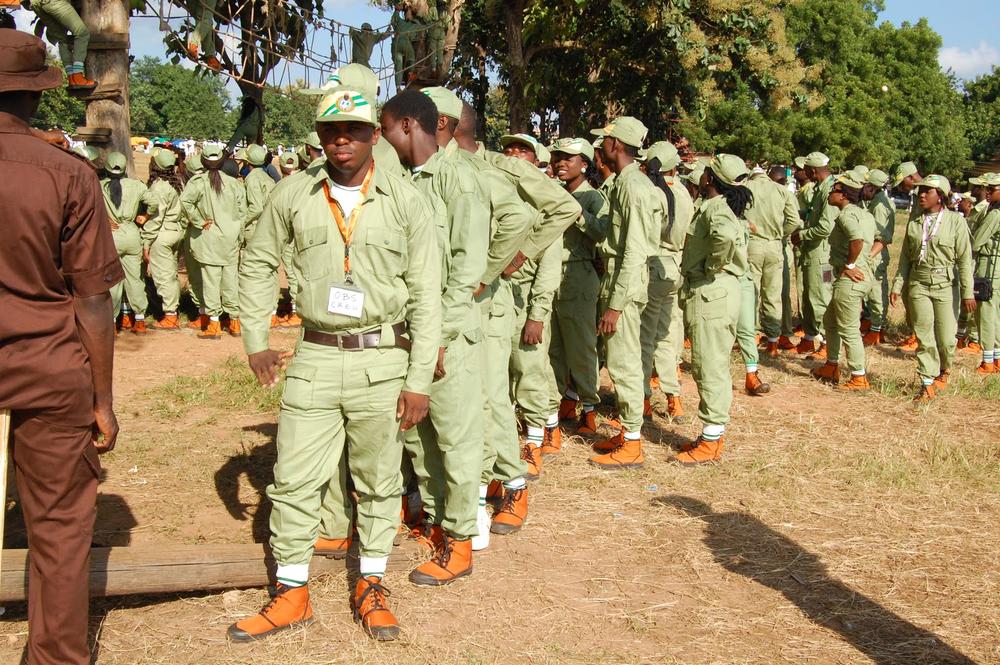
In lieu of this events concerned corpers cds  Nysc Jigawa State Dance and Drama Cds (also known as Culture and Tourism CDS) decided to organize a  Campaign Against Rape (C.A.R). To raise awareness and educate the people on the dentrimental effects of rape to the society.
This massive campaign is going to begin on the 27th Of April 2017. This is a great move by the Community Development Service(CDS) and they would require as much support from us.

Join The Movement  Join hands to Fight this Menace in our society.

Reach

 Dance and Drama Cds Dutse,Jigawa State (Culture and Tourism CDS)
www.danceanddramacdsjigawa.cf
follow on instagram      @DanceandDramaCDS

Check the contacts section of their website for enquiries


Reference:
http://punchng.com/two-men-rape-10-year-old-girl-jigawa-•police-arraign-53-rape-sodomy/
http://www.authorityngr.com/2016/08/Jigawa-records-57-rape-sodomy-cases-in-6-months/


The Academic Staff Union of Universities, Federal University of Agriculture, Abeokuta chapter, has dissociated itself from the call for the sacking of the institution’s Vice-Chancellor, Prof. Olusola Oyewole,  Pro-Chancellor, Senator Adeseye Ogunlewe, and members of the Governing Council.
The union made its stand known on Friday while briefing journalists about the crisis rocking the institution.
The ASUU chairman FUNAAB chapter, Dr. Adebayo Oni, said the VC and the Council were duly appointed in line with the laws establishing the university and could not be removed from office without due process.
It will be recalled that the FUNAAB chapter of the Senior Staff Association of Nigeria Universities, rising from its congress on Wednesday, had announced the officers’ suspension.
The chairman SSANU in the institution, Mr. Rotimi Fasunwon, who made the announcement, said Oyewole had contravened Section 5.10.1 (Interdiction) of the FUNAAB’s Senior Staff Rules and Regulations, which prohibit him from “suspending three staff of the university since himself is presently undergoing criminal investigation under the Economic and Financial Crimes Commission.”
Oni, who condemned the SSANU action, said the varsity is not a ‘Banana Republic’ where lawlessness could be condoned.
He said, “Our union will vehemently resist any attempt to turn our highly revered university into a Banana Republic or Animal Farm.
“We hereby dissociate ourselves from any clandestine move to drag the reputation of FUNAAB into the mud.”
Oni advised aggrieved members of staff to explore the lawful internal mechanisms of due process in seeking redress.
The union restated its members’ confidence in the ability of the institution’s incumbent administration and council to provide academic, research and administrative leadership.


The National Parents and Teachers Association of the Federal Government Colleges has protested against the increase in the school fees of unity schools by the Federal Government, describing it as “commercialisation of education.”
The organisation warned that the new fees, if not reversed, would force parents to withdraw their children from the unity colleges.
The association in a communiqué read to journalists by its National President, Dr. Gabriel Nnaji, at the end of its National Executive Council meeting, said the increment from N20,000 to N75,000 was untimely and insensitive by the government.
According to him, the fee was increased on June 1 by the government.
The communiqué partly read, “The increase of school fees from about N20,000 to about N75,000 in unity colleges is most untimely and insensitive. An average Nigerian worker whose minimum wage is N18,000 and who has one or two children in the unity colleges will be unable to keep his or her child or children in the unity colleges.
“The recent increase is a negation of the policy or principle that established unity colleges which is to make basic and secondary education affordable and accessible to an average Nigerian student.”
The association therefore appealed to President Muhammadu Buhari and the members of the National Assembly to compel the Federal Ministry of Education to revert to the old fee regime “as the education of Nigerian children is a right and not a privilege.”
“The association will continue to partner the Federal Ministry of Education by complementing the efforts of the ministry in the provision of basic facilities in the unity colleges,” Nnaji said.
According to him, while NAPTAFEGC appreciated the Federal Ministry of Education in making the payment of insurance levy in the unity colleges optional, the association frowns on any attempt to commercialise or make the cost of training Nigerian children in the unity colleges beyond the rich of an average Nigerian parent.
He said, “Enough budgetary provision should be adequately made and very timely released to the unity colleges to enable students to continue to compete very favourably with students of other academically sound private colleges.
“The issue of security in unity colleges must be given the deserved attention and commitment all the time. Students who have paid for books should always be made to receive them in good time and not when they are no longer needed.”

The Mobiliztion/Senate list for the PCMS of Batch B 2016 are currently being released by the various institutions. We advice that you contact the student affairs office of your school to verify you have been selected.
Based on available information these nine schools have released their Batch B 2016 senate lists and will be uploaded.


1.  UNIVERSITY OF PORT-HARCOURT

2. MICHAEL OKPARA UNIVERSITY (FEDERAL UNIVERSITY OF AGRICULTURE,ABIA STATE)

3. NNAMDI AZIKIWE UNIVERSITY

4. FEDERAL POLYTECHNIC OWERRI

5. UNIVERSITY OF UYO

6. RIVERS STATE POLY TECHNIC (KEN POLY)

7. AUCHI POLYTECHNIC

8.AKANU IBIAM FEDERAL POLYTECHNIC


This list will be updated regularly as data is gathered about other schools.

NOTE: This lists pasted by these schools have not yet been uploaded on the nysc site, but will be, in due time

Contrary to false reports, the Batch B timetable has not yet been released . PCMS should therefore 
not assume that the alleged timetables they have seen are correct as nothing as such  has been released
by the NYSC.


PCMS for the Batch B 2016 .Should check the NYSC site regularly,as you will be notified when
checking the senate list online would be available.

When the senate list is available online, these are the procedures to check if you are qualified.

1. Visit the Nysc registration portal via the website below;
http://portal.nysc.org.ng/nysc1/verifysenatelists
2. Select your Institution (i.e School you graduated from)

3. Enter your Matriculation Number and Surname in the spaces provided
4. Select your date of birth
5. Click the SEARCH button to access the mobilization list.

NOTE: The uploads take time ,do not be bothered if you do not see your names initially
as long as it was present in the list your school provided.


More details would be provided as soon as available,so please endeavour to check this page 

regularly. You may add it to your bookmarks.


The Federal Government has approved the appointments of 17 new chief executives heads for some parastatals and agencies under the Federal Ministry of Education.
A statement from the ministry on Monday said the appointment was with immediate effect.
Some of the affected agencies include the Joint Admissions and Matriculation Board,  the Universal Basic Education Commission and the National Universities Commission.
Others are the National Library of Nigeria, the National Examinations Council and the Nomadic Education Commission, among others.
The appointees are Prof. Abubakar Rasheed, NUC; Dr. Hameed Bobboyi, UBE; Prof. Ishaq Oloyede, JAMB; Prof. Charles Uwakwe, NECO; Prof. Lilian Salami, Nigerian Institute for Education Planning and Administration; Prof. Lanre Aina, National Library of Nigeria; Prof. Abba Haladu, National Commission for Mass Literacy, Adult and Non-Formal Education; Prof. Bashir Usman, Nomadic Education Commission and Prof. Isioma Isiugo-Abanihe, National Business and technical Examinations Board.
Others are Prof. Sunday Ajiboye, Teachers Registration Council of Nigeria; Afolabi Aderinto, Computer Registration Council of Nigeria; Prof. Bappah Aliyu, the National Commission for Colleges of Education; Dr. Abdullahi Baffa, Tertiary Education Trust Fund and Prof. Garba Dahuwa Azare, National Teachers Institute.
The Federal Government also named Prof. Michael Afolabi as the new head of the Librarian Registration Council of Nigeria; Prof. Steven Ejugwu Onah, National Mathematical Centre; and Prof. Chinyere Ohiri-Aniche, National Institute of Nigerian Languages.
The President was said to have also retained some chief executives.
They include, Prof. Samaila Junaidu, Nigeria Educational Research and Development Council; Prof. Rauf Adebisi, Nigerian French Language Village; Dr. Mas’ud Kazaure, National Board for Technical Education; and Prof. Muhammad Mu’az, National Arabic Language Village.

The Academic Staff Union of Universities on Monday protested against the decision of the Federal Government to scrap the post-Unified Tertiary Matriculation Examination.Warning that the scrapping “portends a serious danger for the quality of education in Nigeria, “the union also said the decision undermined the autonomy and powers of universities’ Senate as the highest policy-making body on academic matters, particularly admission of students and award of degrees.The ASUU President, Prof. Biodun Ogunyemi, who stated this in Abuja, added that the Federal Government did not consult the union on the matter.He said, “The cancellation of post-UTME to us portends a serious danger for the quality of education in this country.“The argument of Federal Government on the policy is unacceptable and potentially harmful to the future of Nigerian’s education system. We call on the government to rescind its decision and convene a genuine stakeholders ‘ meeting on the issue before making any policy statement.”

The Joint Admissions and Matriculation Board has given condition for the 2016 admissions, saying it will only give approval “after appropriate screening of the candidates by the institutions.”The Registrar/Chief Executive of JAMB, Prof. Dibu Ojerinde, said this in a statement on Sunday.Ojerinde said, “The Joint Admissions and Matriculation Board wishes to state that the latest list of candidates sent to all the tertiary institutions contains candidates who qualified for screening based on theindividual institution’s capacity. It’s not in any way an admission list.“However, if this list is not sufficient for the need of any institution, such institution can source from the omnibus printout earlier sent to them by the board. The public and all tertiary institutions should note that admission will only be approved by the board after appropriate screening of the candidates by the institutions.“The list, which is made up of candidates, who met the national cut-off point within the set criteria, is sent to the institutions. Again, for purposes of clarity, all institutions that have need for more can source from their omnibus printout as stated above. The candid intention of the board is to ensure that available spaces are adequately utilised.”The Federal Government had, on Saturday, clarified its ban on Post-Unified Tertiary Matriculation Examination and the general admission procedure.It said it “does not in any way affect the statutory role of the Senate of any university or the academic board of any tertiary institution conducting its admissions.”The Minister of Education, Mallam Adamu Adamu, also made the clarification in a statement by the Deputy Director of Press and Public Relations in the Ministry of Education, Mr. Ben. Bem-Goong.He said the clarification became necessary “following conflicting reports in the media over the roles of universities and JAMB in admission under the new dispensation.”According to him, the role of JAMB is to conduct the UTME, compile the list of candidates whose scores meet the cut-off marks (180 and above) and send same to the universities.The institutions, he emphasised, would shortlist the candidates, using the agreed guidelines and thereafter return the shortlisted candidates to JAMB for verification of compliance with the guidelines and issuance of JAMB admission letters.“For the avoidance of doubt, any screening charges shall apply only tosuccessful candidates, who have been issued admission by the universities of their choice,” Adamu stated.Meanwhile, the Vice-Chancellor of the Ahmadu Bello University, Zaria, Prof. Ibrahim Garba, has said the Senate of universities in the country should be responsible for setting standards for admissions into their institutions.Garba stated this while answering questions at theNews Agency of Nigeriaforum in Abuja.The vice-chancellor faulted the situation where JAMB and the Ministry of Education set standards for admission into the university.Garba stated, “Universities have autonomy by law; each university should set its criteria for taking students.“But of course, JAMB and the ministry are saying that because it is our country, we must have a policy that regulates, so that we have a good balance but not on quality.“A university Senate is supposed to set standard for accepting students that it takes and trains and graduates.“We are hoping that very soon, we will resolve this matter because it is getting more and more embarrassing.“Even the state universities have told the Federal Government that education is in the concurrent list in the constitution.“The Federal Government has no control and should not have control over a state university; they have a council appointed by the governor.“They can only fulfil NUC’s standard requirements, but not admissionquota.’’The ABU vice-chancellor explained that the minister’s directive, leading up to the scrapping of the post-UTME, had created an impasse in universities as they had yet to begin admissions.According to him, universities could not take the products of JAMB without further testing them.He said that universities, being the recipients of the candidates, should be able to select those they could train.Garba added, “We found it, as universities, that the post-UTME tests are the best to get the best. JAMB is only trying to improve, but still not perfect to a point that we can trust.“Post-UTME has a history; even when it started, JAMB encouragedus to do it. JAMB is improving, but it is not yet there because every year, we receive these products and we see what they are.”He said that in 2016, ABU had 49,000 applicants, who scored above 180 points while its admission capacity was 6,500.

The Federal Government on Saturday clarified its ban on Post-Unified Tertiary Matriculation Examination and the general admission procedures, saying it “does not in any way affect the statutory role of the Senate of any University or the academic boards of any tertiary institution conducting its admissions.”The Minister of Education, Mallam Adamu Adamu, stated this in a statement by the Deputy Director (Press and Public Relations) in the Ministry of Education, Mr. Ben. Bem-Goong.He said the clarification became necessary “following conflicting reports in the media over the roles of universities and the Joint Admissions and Matriculation Board in admission under the new dispensation.”According to him, the role of JAMB is to conduct the UTME, compile the list of candidates whose scores meet the cut-off marks (180 and above) and send same to the Universities.The Universities, he emphasised, will shortlist the candidates using the agreed guidelines and thereafter return the shortlisted candidates to JAMB for verification of compliance to guidelines and subsequent issuance of JAMB admission letters.“For the avoidance of doubt, any screening charges shall apply only tosuccessful candidates who have been issued admission by the universitiesof their choice. All Universities and JAMB should adhere to this directive”, Adamu stated.

Only One Nigerian University Made The List Of Top 800 Universities In The World


Only one Nigerian university is ranked among the top 800 universities in the world, according to Times Higher Education World University Rankings for 2015/2016 released this week.

The only university that made the list is Nigeria’s oldest University, University of Ibadan, which is ranked 601st.

The University of Cape Town, South Africa, at 120th position, is the highest ranked university in Africa. Five other South African universities also made the list.

The ranking was released on Wednesday, September 30, 2015.

Edo State Governor Adams OshiomholeThe Edo State governor, Adams Oshiomhole, has condemned the sale of honorary awards by some Nigerian universities to individuals of “questionable character.”


Oshiomhole noted that such acts had dented the sanctity of the nation’s education system, calling for a review of such awards as a way of santising the system for future generations.
The governor spoke during the 19th convocation of the Ambrose Alli University, Ekpoma, Edo State, where three Nigerians – the Esogban of Benin Kingdom, Chief David Edebiri; a philanthropist and businessman, Dr. Lee Ikpea; and Pastor Chris Oyakhilome of the Believers Love World, a.k.a Christ Embassy, were honoured by the institution.
He said, “One of the problems that confront us today as a nation is that even the ivory tower seems to have given up and many are now in a hurry to award honourary degrees even to people of clearly questionable character. That a man is rich doesn’t mean he is successful; what defines a successful man is the overall totality of his lifestyle.
ADVERTISEMENT
“And so when we see universities giving honours to those who can dole out, it becomes award for the highest bidder and, of course, it disturbs the values of our younger ones. So, when universities give honour to people just because they are rich and even when the source of the wealth is so clear that it is not a result of industry and hard work, then I think it is very sad for Nigeria.”
Oshiomhole, who is the Visitor to the university, emphasised the need for a new national policy on education to provide equal opportunity based on intellectual capacity rather than socio-economic class.
He said, “We must revisit the question of appropriate national education policy so that it must be possible for the child of the poor to have quality education; no child should be denied access to the best schools.
“Even Oxford has had to reverse its policies notorious for providing spaces for only the children of the elite; they now have quota to ensure that a worker with requisite knowledge can go to Oxford University and the state provides subsidy to make that possible.”
Earlier, the Vice Chancellor of the university, Prof. Cordelia Agbebaku, lauded the state government’s support in ensuring that good learning environment was provided for the students.
She also noted that the institution would continue to provide policies that are aimed at improving its academic profile.
A total of 7, 882 first degrees, 239 higher degrees and 46 certificates were awarded at the ceremony.
NIGERIANS, especially the youths, have continued to protest xenophobic attacks on foreigners, especially Nigerians, in South Africa.
The latest protesters included the students of the University of Lagos and members of the Youth Action for Success.
The UNILAG students on Monday staged a protest at the South Africa’s High Commission, Lagos, while the YAS members took to the streets of Enugu on Tuesday.
The UNILAG students delivered a protest letter to the South African High Commissioner, Amb. Lulu Mguni, giving the South African authorities a 24-hour ultimatum to either stop the attacks or face a boycott of businesses and products from the country.
The students came in three buses, one of which had ‘Aluta missile’ on the number plate.
One of the students that participated in the protest told our correspondent that the demonstration had been planned to move on to major South African companies on the Lagos Island but that the police stopped the protesters.
He said, “We issued a 24-hour ultimatum for the appropriate authorities of South Africa to stop the attacks or they risk a boycott of their businesses and products in the country. We will be the ones to champion the boycott.
ADVERTISEMENT
“We were to go to a major South African company on Tiamiyu Savage Street but armed policemen resisted us and we cancelled our trip.”
The Lagos State Police Public Relations Officer, Kenneth Nwosu, confirmed the protest.
He said, “The students, under police protection, demonstrated at the South African High Commission. They made attempts to go to the DSTV and MTN offices but were appropriately advised in the interest of security.
“They peacefully departed after a hitch-free protest.”
In Enugu, the youths, who protested on the streets of the coal city, demanded an end to the attacks within 48 hours, failing which South African investments in Enugu State and other parts of Nigeria would be destroyed.
The youths, under the aegis of YAS, carried placards with various inscriptions. Some of the placards read, “No to mindless killing of Nigerians”, “Stop this xenophobia now” and “Don’t tempt our patience”, among others.
Speaking to journalists during the rally, the leader of the group, Jesechai Okezie, said the South Africans had not been grateful for the hospitality of other Africans.
He said, “We are not happy that Nigerians are being brutalised and killed in South Africa.
“We allowed South Africans to come here and operate; they have Shoprite, Multichoice, MTN and a host of other investments here.
“So why are they killing us? Why are they brutalising us? Why are they denying us of our economic rights?
“We love other nationals here in Nigeria, we treat them with the highest level of hospitality, but this is what we have got in return.”
Demanding an immediate end to the attacks, Okeke said, “These killings must stop forthwith.
“We are giving the South African government 48 hours to ensure that these killings and looting come to an end.
“The President of South Africa must assure the world that the lives and properties of Nigerians are safe; if they don’t do that, we are going to react and our reaction will be disastrous.
“We are asking Nigerian youths to remain calm.”

Pensioners in Abia State have told the state government to stop treating them as beggars by not paying their monthly pensions regularly and consequently issued  an altimatum to government to clear all arrears by January 31, 2015 or face the wrath of senior citizens.

Chairman of Nigeria Union of Pensioners, Abia State chapter,  Comrade Chukwuma Udensi, who issued the ultimatum Tuesday at a press conference in Umuahia , said pensioners decided to make public their plights having endured much deprivations without any succour from government.

He lamented that pensioners in the state had no hope of celebrating the Christmas due to unpaid stipends, accusing the state’s Head of Service of insensitivity to the plights of pensioners.

His words: ” We are here to alert the public of the plights of Abia pensioners to see if they can help us make government look our way because we have explored the option of dialogue but it fell on deaf ears.”

” Pensioners are unfortunately subjected to begging for their rights, many of them have died out of abject poverty, neglect and frustration.”

He said,  “pension is not a privilege but the right of a retiree ; pension is not salary but the savings kept for workers upon retirement.”

Udensi identified some of their grievances to include: unpaid gratuities accumulated over the years since 1999; non payment of harmonization arrears arising from 30%,150%, and 142% which have been computed since 2004, and delayed pay of retired Primary School Teachers and non- tutorial staff of local government education authorities.

“Monthly pensions have been allowed to fall in arrears from January 2014 till date.

“Monthly pensions have not been fully paid not to talk of arrears owed since 2012.” The NUP boss also alleged that the union was also being owed its check-off dues deducted from pensioners’ monthly stipends for the up-keep of the union.

But in a swift reaction, the state’s Commissioner for Information, Chief Anthony Agbazuere debunked claims by pensioners that they were  being owed, dismissing their action as politically motivated.

Agbazuere noted that during political seasons, some people not grounded with the truth always  ally with politicians to spread falsehood.

He said that pensioners  as well as all workers in the state had been enjoying the best of treatments from the  government, adding that upon assumption of office, Gov. Theodore Orji mapped out large chunk of money for payment of pensioners.

Agbazuere however blamed pensioners for making their agitations a media affair when they had not explored the necessary options for dialogue.”

The Subsidy Reinvestment and Empowerment Programme has said about 100,000 graduates across the country are currently engaged in its Graduate Internship Scheme.

The agency gave this figure at a training session for new inductees into the programme in Akure. The training comprised modules on micro-financing, communication skills, team work management, performance measurement, entrepreneurship, rule of work, company structure and Information and Communication Technology.

Also about 100 graduates drawn from the 18 local councils in Ondo State were recently engaged by the agency for the GIS programme.

The GIS is an initiative of the Federal Government aimed at creating a pool of highly trained graduates who, instead of, looking out for unavailable employment, can become self reliant.

Project Director of the GIS, Peter Papka, said in Akure that participants were already engaged with employers where they are gaining office experiences and undergoing entrepreneurial training.

According to him, SURE-P was conceived to expend surplus subsidy funds on human and infrastructural developments of the country through the instrumentality of the Federal Ministry of Finance.

The Abia State University on Tuesday confirmed a 20 per cent reduction in its school fees, beginning from 2014/2015 academic session.

The News Agency of Nigeria reports that an increase in the tuition in 2012/2013 session had put the university authority and the students on war path.

Mr Udo Nwokocha, the Dean of Student Affairs of the university, told NAN on telephone that the reduction cut across all the faculties.

The fees, which was raised in 2012, had forced the students to stage peaceful demonstrations.

The students had considered the hike in the tuition as government’s attempt to deny them of their right to education.

NAN reports that In the old fees regime, a student of Mass Communication pays N130,000 per session, while law and medical students paid N140,000.

Some students who spoke to NAN observed that there was low turn out of candidates who applied to write the post-JAMB UTME test because of the high fees.

A student, Chidinma Eleri told NAN that many prospective students, who could have chosen the university, applied elsewhere because of the high fees.

Reacting to the new development, Mr Isreal Ahamefula, the President of the university’s Student Union, said the reduction was a right step in the right direction.

He thanked the state government for listening to the plight of the students by bringing down the fees.

“On behalf of the students, I thank the state government and the school authorities for the reducing the fees.

“This has been a long awaited welcome development,”  he said.

Of the 246,853 candidates who sat for the
November/December 2014 West African Senior
School Certificate Examination, only 72,522
candidates, representing 29.37 per cent,
obtained credits in five subjects, including
Mathematics and English Language.
This puts the percentage of failed candidates at
70.63 per cent.
However, the Head of the Nigeria National
Office, the West African Examinations Council, Mr.
Charles Eguridu, said there was an improvement
when compared with last year’s 26.97 per cent
(amounting to 80,135 candidates) who
obtained five credits in five subjects, including
Mathematics and English Language.
Announcing the results in Lagos on Thursday,
Eguridu said there was a marked reduction in
examination malpractices.
He attributed this to recent measures, including
the introduction of biometric registration and
customised mathematical sets with inbuilt
calculators, taken to curb the scourge.
Notwithstanding efforts made to curb examination
frauds, Eguridu said WAEC withheld results of
28,817 candidates.
He said the results which represented 11.67 of
the number of candidates who wrote the
examination, were withheld for “various cases of
malpractices.”
The cases, according to him, are being
investigated with the reports of findings expected
to be presented to the National Examination
Committee for consideration.
The examination agency had withheld 38,260
results, equivalent of 12.88 per cent of the total
number of candidates who sat for the
examination in 2013 for similar reasons.
Short of the total figures are 5,691 candidates
(about 2.3 per cent) whose results, Eguridu said,
were still being processed for errors he blamed
on the candidates and cyber café operators.
He said, “Of the total number of candidates that
sat for the examination, 75,313 candidates
(30.5 per cent) obtained credits and above in
six subjects; 110,346 candidates (44. 7 per
cent) obtained credits and above in five.
“In addition, 145,036 candidates, representing
58.75 per cent, obtained credits and above in
four subjects while 177.177 candidates,
representing 71.77 per cent, obtained credits
and above in three subjects. A total of 205,090
candidates (83.08) obtained credits and
above in two subjects,” he presented.
The total number of candidates that sat for the
examination this year is 61,364 short of the
308,217 candidates that wrote it last year – a
decline of about 20 per cent.
There was also a shortfall of “blind candidates”
enrollment. The figure fell from 82 recorded the
previous year to 48. And while 17 of the
category of candidates obtained five credits in
2013, four achieved similar feat this year.

The title may be a little bit misleading, because
this problem is not only limited to Nigerian
schools. It’s a worldwide phenomenon
occasioned by teachers, lecturers and
instructors who make no effort to update
themselves and add to what they already
know. These lies – at least some of them –
were facts at some point in time, but things
have since moved on.

Truths
become lies as new discoveries are being made.
Here are 16 lies that are still dished out the world
over even as you read this:
There are six classes of food : I was taught – and I
know most of you were taught – that there are 6
classes of food, namely, proteins, carbohydrates,
vitamins, fats and oil, minerals and water. It is no
longer the case. Officially, there are
now SEVEN classes of food: proteins,
carbohydrates, vitamins (or vegetables), fibers, fats
and oil, minerals and water. Fiber is derived from
plants and it was initially left out by nutritionists
because it seemingly does not add any nutrient to the
body. What fiber does that it alters the way our
gastrointestinal tract absorbs food. Fiber itself is
indigestible; it is broken down in the large intestine
not by the body’s digestive system, but by the trillions
of bacteria that live there.
There are nine planets in the solar
system: Astronomers are regularly discovering new
planets all over the universe. However, the number
of planets in our own solar system has been reduced
from nine to eight. This is due to the declassification
of Pluto as a planet. Pluto was officially
downgraded by astronomers at the 26th General
Assembly of the International Astronomical Union
which was held in Prague, Czech Republic, in
2006. It is now a dwarf planet. Astronomers
found out that it is merely a huge ball of ice and
rock orbiting the Sun in an area known as the
Kuiper Belt. The Kuiper Belt is located beyond
the planet Neptune (which is now the farthest planet
in the solar system) and it contains over 70,000 icy
objects similar to Pluto. Pluto happens to be one of
the biggest of these icy objects, but it’s not the biggest.
The biggest is Eris. Eris, a dwarf planet, is the
largest object in the Kuiper Belt. It’s about 25%
more massive than Pluto.
There are four oceans : That was until the year
2000 when the International Hydrographic
Organization concluded that a distinct body of sea
that completely surrounds the continent Antarctica
will be the Earth’s fifth ocean. The exact
geographic coordinates of the salty water are yet to
be agreed upon, but most sources will tell you that it
lies to the south of Australia, New Zealand and the
tip of the South American continent.
There are three states of matte r: There are several
states of matter, in fact. According to physicists, in
addition to solid, liquid and gaseous, plasma can be
observed in everyday life. Actually, scientists claim
that plasma is the most abundant form of matter in
the universe, because most of the stars, including
our own Sun, are in a plasma state. Other states
of matter include the neutron-degenerate matter,
Bose-Einstein condensates, liquid crystals,
superfluids, quark-gluon plasmas, quantum hall
state, supersolid, string-net liquid, superglass and
dark matter. But these forms of matter are very
rare and some of them have not been observed, but
are believed to exist.
Humans have only five senses: It turns out that
sight, hearing, touch, smell and taste are not the
only sensory responses human beings exhibit.
Human sensory receptors can also respond to pain
(nociception), changes in temperature
(thermoception), changes in balance
(equilibrioception), position (proprioception),
magnetic direction (magnetoception) and the passage
of time (chronoception).
Humans evolved from apes : This is a great lie and
misconception that has been here with us since the
day Charles Darwin published his controversial
“On the Origin of Species by Means of Natural
Selection, or the Preservation of Favoured Races
in the Struggle for Life.” According to this well-
known biological framework, human beings and the
modern-day apes evolved from a single, now-
extinct ancestor. As time passed by, these ancestors
of ours began to evolve differently based on climatic,
nutritional, geographical and social changes.
Mount Everest is the highest place on earth : Mount
Everest is the highest mountain in the world quite
alright, but it’s not the part of the world that is
closest to outer space. Here how it works: the
Earth does not have a perfectly round structure
like the world globes you’ll find in most schools.
Geographers call this anomaly an oblate spheroid,
which means that the earth has a bulge towards the
equator. As a result of this bulge, places close to the
equator are “further out” from the centre of the
Earth than places that are far away from it.
Ethiopia, Kenya, Gabon, Colombia, the
Democratic Republic of Congo and other countries
that straddle the equator are “further out” from the
centre of the Earth and are closer to outer space
than countries that lie towards the north and south
poles, such as the Scandinavian countries, Russia,
Canada, the United States and Greenland. Going
by this phenomenon, the title of the highest spot on
Earth belongs to a mountain in Ecuador that you
may not have heard of. The rather unspectacular
Mount Chimborazo in the Andes of South America
has been identified as the highest point on earth and
its closest part to outer space. The peak is in reality
1.5 miles “higher up” than Mount Everest because
it sits atop the Earth’s bulge, though it only
measures 20,564 ft from sea level, while Everest
measures 29,029 ft. But for the sake of clarity,
Everest is still the highest mountain in the world
from sea level, but if two objects are descending
from outer space from the same distance and at the
same pace to the two mountains, the one coming
down to Chimborazo will land before the one
descending to Everest. Everest is actually the fifth
furthest place from the centre of the Earth;
Huascaran in Peru, Cotopaxi in Ecuador,
Kilimanjaro in Tanzania and Chimborazo are all
further.
Babies are born tabula rasa : For ages, arguments
and counterarguments have been made by
psychologists and philosophers over whether human
beings are born with the so-called blank slate. But
thanks to advancements in genetic studies, most of us
are now in the know that humans transfer some of
their characteristics (known as traits) to their
offspring. These traits go a long way in determining
how the offspring will react when put in certain
situations and subjected to certain conditions.
Different parts of the tongue detect different
flavours: Even in my university days, I was taught
by professors that different parts of the human
tongue are specialized for detecting different tastes.
The so-called tongue map balkanized our taste
organ into areas responsible for detecting sweetness,
bitterness, saltiness, sourness and unami. Per
contra, it turns out that most taste buds on the
tongue and in other areas of the mouth can detect
any taste irrespective of their position.
Europeans brought Christianity to Africa and
Christianity is a Western Religion : Christianity is
the world’s largest religion and it originated from
Asia in the geographical East. The movement that
gave rise to Christianity was begun by Jesus Christ
who was born over 2000 years ago in Bethlehem in
present-day Palestine. The followers of the
teachings of Christ were first called “Christians” in
the town of Antioch which is now a historical site
in present-day Turkey. Antioch lies on the eastern
part of Turkey which is in Asia. It is not clear
when Christianity was brought to either Europe or
Africa. It is recorded in the Bible that Christ was
taken to Egypt as an infant by Mary and Joseph
who were fleeing from Herod the Great during the
Massacre of the Innocents. However, Christ’s
ministry began few years before He was crucified.
It is not recorded if He went to Africa or Europe
during His ministry. What is clear, though, is that
one of His apostles, Mark, established the first
church in Africa twelve years after the crucifixion,
known as the Church of Alexandria.
Some years before that, another apostle, Philip,
was recorded in the Acts of the Apostles to have
baptized an Ethiopian eunuch on the road leading to
Gaza from Jerusalem. The Acts, however, did not
tell us where the eunuch went afterwards or if he
spread the message in Ethiopia. A church was
established in Ethiopia some years after the Church
of Alexandria in Egypt and it is still in existence
today. Most present-day Ethiopians are Christians
and their own form of Christianity is not linked to
the ones spread by the Europeans.
The Bible, the Church and People in the Middle
Ages believed that the Earth was flat: According to
the notion – which has been erroneously published in
some textbooks – Christians in the Middle Ages
believed that the Earth was flat. The notion has it
that it was not until Genoese explorer, Christopher
Columbus, had “sailed round the world” without
falling off the Earth's presumed edge (and
“discovered” what turned out to be North America)
that the Church leaders came to the realization that
the Earth is indeed spherical and not flat. Contrary
to this view, Greek astronomers and pretty much
everyone else then knew long before the advent of
Christianity that the Earth was spherical. The
early Greeks were renowned astronomers who
made predictions that are still correct today. The
Bible also alluded to a spherical Earth. Isaiah
40:22 says that “He (God) sits enthroned above the
circle of the earth.” It was only a handful of
scholars in the Middle Ages who claimed to be
representing the whole Church that believed in a flat
Earth.
Michael Faraday invented electricity: No-one
actually invented electricity. The form of energy
now known as electricity has been there since the
beginning of the world. Electricity occurs in
nature. A lightning bolt, for example, releases
electricity.
Thomas Edison invented the light bulb: While it is
not clear who invented light bulbs, they were being
used as electric lights more than 50 years before
Thomas Edison patented his famous invention in
1879. What Edison invented was the world's first
commercially viable incandescent light bulb.
Diabetes is caused by sugar : Sugar doesn’t directly
cause diabetes, but if you consume too much sugar,
you are likely going to get diabetes. What sugar
does is that it increases the quantity of calories in
the body. Too many calories in the body lead to
weight gain which significantly increases a person’s
likelihood to develop type 2 diabetes.
The Whites kidnapped Africans and sold them into
slavery: This is not entirely true. Most slaves that
were shipped into the Americas to work in
plantations were actually captured by their own
kinsmen and sold to the Europeans. When it all
began, the Europeans were the ones doing the
kidnapping. They organized abduction raids to
capture slaves from different communities. But in
no time, they realized that it was too dangerous a
venture for them since they were not familiar with
the inland terrains. What did they do? They
subsequently found people that will do their dirty
jobs. Then came the local chiefs and the greedy
merchants. They were given this responsibility in
exchange for money and other privileges. At the
height of the slave trade, this practice became a
lucrative business along Nigeria’s Atlantic coast.
The United States of America is the world’s
largest economy : That was until 2014; October to
be precise. The US is still the richest country
when measured by reserves and collective national
wealth, but it no longer has the world's largest
economy, according to the International Monetary
Fund’s Gross Domestic Product Purchasing
Power Parity (GDP PPP) estimates. China is
now the world’s largest economy. In the IMF's
indices, China’s GDP is now worth $17.63 trillion
compared with the US’ $17.55 trillion. The IMF
makes its calculations based on purchasing power
parity, a measure which is preferred by most
economists. Purchasing power parity adjusts a
country’s GDP for inflation based on the fact that
the prices of goods and services as well as cost of
living vary from country to country. When not
measured based on purchasing power parity, the
United States is still the world’s number one
economy with a GDP of $16.8 trillion compared
to China’s $10.3 trillion.

The First Lady, Dame Patience Jonathan, has called on
relevant authorities and stakeholders to ensure the
enforcement of girlchild’s rights to education in Nigeria.
This is contained in a statement issued by Mr Ayo
Adewuyi, the Media Adviser to the President’s wife, in
Abuja on Friday. The statement stated that Jonathan
made the call at a dinner organised by Northern Women
Progressive Initiative on Thursday in honour of the
immediate past Chief Justice of Nigeria, Justice Aloma
Mukhtar. She said that societal development could be
guaranteed if female children were given equal rights and
access to education. According to her, the former chief
justice by achievements underscored the importance of
girlchild education. Jonathan said, “She is a testimony of
the adage that says ‘when you educate a woman, you
educate a nation’. “It is, therefore, clear to all that it is
education that has made our celebrant of today to get to
the peak of her spotless judicial career successfully. “It is
education that made her a lady of strong character; it is
education that made her morally upright. “Let me restate
my call for legislative instruments for the right of the
girlchild to education.”


Determined to boost research in tertiary institutions, the
Federal Government has promised to build an N800
million state-of-the-art research library for the
University of Port Harcourt.
The Minister of Education, Mallam Ibrahim Shekarau,
who made the pledge on Tuesday, during a facility tour to
UNIPORT, explained that the document that would
enhance the beginning and the completion of the project
were ready.
Shekarau pointed out that funds would be drawn from the
Tertiary Education Trust Fund to execute the project,
adding that university will not survive without research.
The proposed modern library, according to the minister,
will encourage lecturers and students to go into researches
and come with innovations.
He stated that the documents for the construction of the
library would soon be handed over to the Vice Chancellor
of the university, Professor Joseph Ajienka.
“The Federal Government is happy about the number of
projects in the University of Port Harcourt and we are
ready to build a state-of-the-art research library in the
institution.
“The project is going to cost N800 million. We are doing
this because we know that the university is about research.
In fact, remove research and there will be no university.
Any moment from now, the document will be handed over
to the vice chancellor of this university,” the minister said.
Shekarau, who also interacted with UNIPORT
students, described projects being executed in federal and
state universities as part of the transformation agenda of
President Goodluck Jonathan.
Explaining that the TETFUND intervention was for
both state and Federal Government tertiary institutions,
Shekarau said education should not be politicised in any
form.
Earlier, the Vice Chancellor of the university hailed the
contribution of TETFUND to the development of
tertiary institutions across the country, adding that
UNIPORT remains the only university in Nigeria with
a foundation.
Ajienka lamented that the university had been facing the
challenge of land encroachment by its host communities,
attributing the situation to the inability of the Federal
Government to pay them (host communities) compensation.

The Vice-Chancellor of Abia State University,
Professor Chibuzor Ogbuagu, has stoutly debunked the
rumour making the rounds that a certain governorship
aspirant in the state paid one month salary arrears of staff
of the institution.
Professor Ogbuagu who made the denial while fielding
questions from journalists during a pre- convocation press
conference, said that there was no iota of truth in the
speculation, and enjoined members of the public to disregard
it.
He however, admitted that one of the aspirants, Dr.
Uche Ogah, had about three years ago, approached the
management of the institution for a parcel of land to build
an auditorium which he had since donated to the school.
The VC said payment of staff salary has been from only
two sources – the state government, and the Internally
Generated Revenue of the university.
He also denied speculations that lecturers and students
were deserting the university in droves due to poor
working condition and high school fees.
Professor Ogbuagu said that movement of lecturers from
the university to other institutions was normal and not
peculiar to ABSU.
He said that it was not strange to the university system
for lecturers to move from one school to another,
contending that himself had been to seven different
universities as a lecturer.
His words: ” There is no brain drain in ABSU; what
we have is normal flow of lecturers , and it allows for
solid cross fertilization of ideas”.
The VC announced a downward review of tuition by 20
percent , saying that Medicine and Surgery students now
pay N100,000 , while students of professional courses ,
and normal courses pay N90,000 and N80,000
respectively.
He said the reduction in fee was in response to appeals by
students , and to make for competitive fairness.
The VC said management of the institution had zero
tolerance for cultism and illegalities, disclosing that over
seven lecturers including a Reverend Father had been
dismissed due to some unwholesome acts.
On the proposed relocation of the Law faculty of the
university to Umuahia, the VC said the policy was in
line with the laws establishing the institution which made it
” a three- campus institution with branches in Aba and
Umuahia, while Uturu is the main campus”.
He commended the state government for defraying the
salary arrears of staff, as well as federal government for
its financial supports through the Tertiary Education Trust
Fund.

Outgoing Vice Chancellor of the University of Benin,
Prof. Osayuki Oshodin, on Sunday said that he had
adversaries who opposed his style of administration as head
of the institution.
Oshodin, who spoke shortly after a thanksgiving service
held in his honour in Benin, said that his resolve to do
things differently, which he said contributed to the success
of his administration, did not go down well with his rivals,
who he said were interested in their personal interest.
He said there were an assassination attempt on his life as
well as an attempt to poison him but that his vision and
determination to improve the university had been a source
of motivation.
Oshodin said, “It has been really interesting; I believe I
have done my best, I had a mission and a vision and I
had a strategic plan only known to me and I am happy
that I implemented all these strategic plans.
“I met resistance from the devils and I stood my ground
and they tried to eliminate me several times but they didn’t
succeed. If you have God on your side, they will not
succeed.
“People did not know why people were fighting me; they
were fighting me because I blocked their ways of
embezzling allocations sent to the University of Benin.”
The professor of health education, who assumed office on
November 30, 2009, also attributed his success to the
proper utilisation of intervention funds like the Tertiary
Education Trust Fund and the establishment of a
mutually-transparent relationship with the unions in the
university.
“I have established over 27 programmes; there was no
veterinary medicine in the whole of the South-South, I
have established one there, which is good omen for those of
us here and so many others; they are all in my terminal
report,” he said.